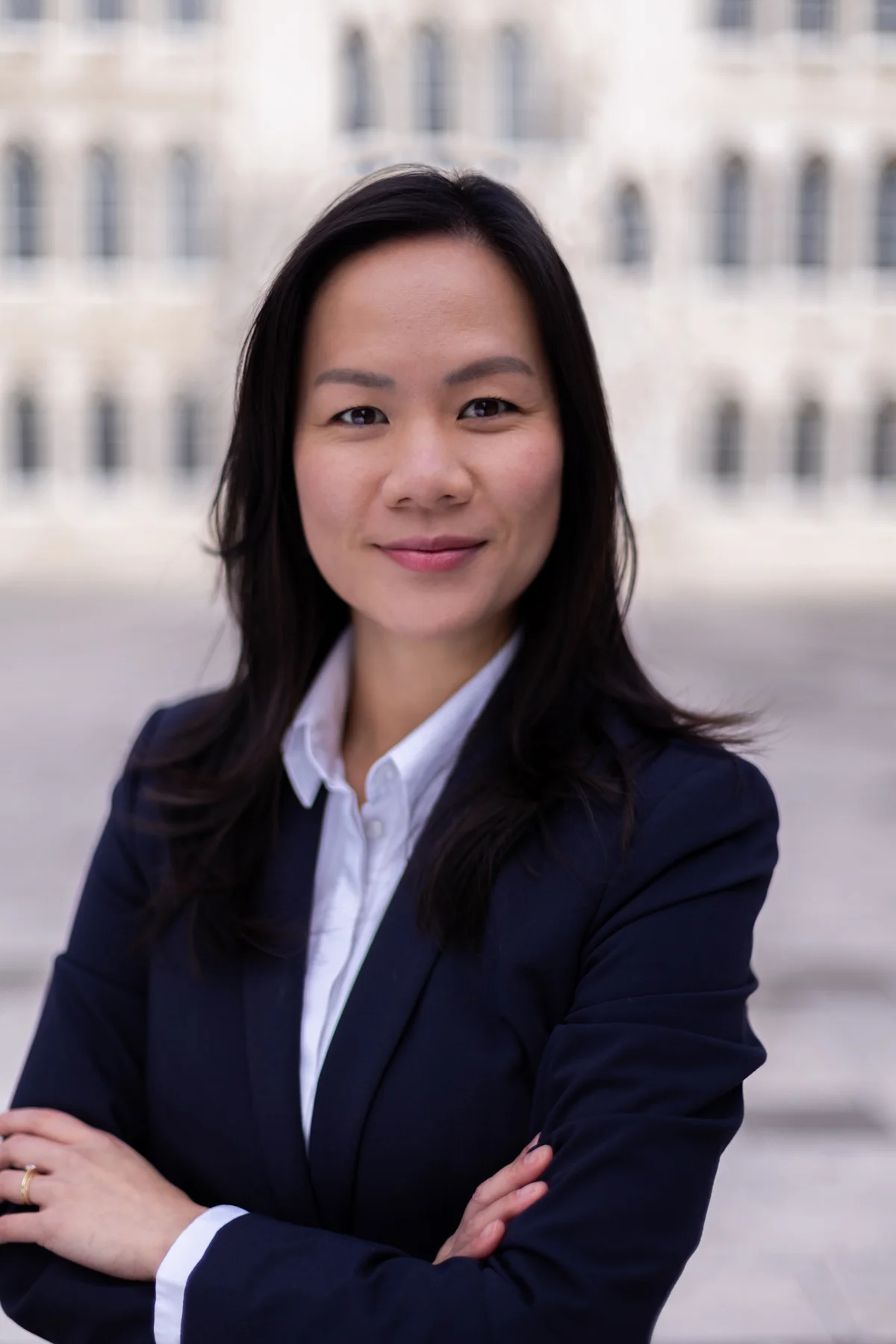
Carmen Arakelyan
An International Politics and Economics graduate who started in law as a legal secretary, put SQE1 on hold to be with her family, then came back to pass
Published: 11 November 2026
Find and connect on LinkedInFrom legal secretary to SQE1 pass: why I didn’t rush the exam
What’s your background, and why did you decide to do the SQE?
I graduated with a degree in International Politics and Economics. At the time, I wasn’t sure what I wanted to do, and I ended up falling into law as a legal secretary.
Thankfully, I joined a good, small firm where I had the opportunity to get involved in lots of different things. I was always willing to muck in and help, and over time I was given increasing responsibility. My boss encouraged me to pursue a career in law, although it took me around ten years to finally agree with him!
As my experience grew, I realised that law was something I could genuinely develop in, while also helping people through situations that were often very important in their lives.
By the time I decided to qualify, the SQE had been introduced. As I didn’t have a law degree, I decided to start with a foundation in law course before doing my SQE1 preparation. I wanted to build a well-rounded foundation rather than simply learn enough to pass an exam.
For me, the SQE was therefore an opportunity to formalise the experience I had gained over the years, fill the gaps in my academic knowledge and take the next step towards qualifying as a solicitor.
How did you prepare, and what made the biggest difference in your success?
Studying:
I studied with the College of Legal Practice for SQE1. I liked their structure because they provided a clear timetable of the material to cover each week. Being able to tick topics off and complete periodic mock tests made the preparation more manageable.
However, I found that I needed more depth, so I also used the University of Law books. Although some of their material is still geared towards the old LPC route and therefore contains additional information, I found their question banks very useful.
The biggest difference to my revision, though, was discovering Law Drills. It allowed me to practise a much larger number of questions and use the AI tools to understand my mistakes and identify areas where I was weak. I could then go back and properly understand the underlying legal concepts.
Mocks:
I practised 3x full mock exams under realistic conditions. I timed myself strictly, including water and toilet breaks, and even practised wearing earplugs and having loud “exam hall” background noise playing. I even went to the exam hall beforehand, so I would know what the travel would be like.
That might sound excessive, but I wanted the actual exam environment to feel familiar rather than intimidating. For me, structured learning, additional resources, lots of practice questions and realistic exam conditions made the biggest difference.
Exam Days:
On the days of the exam, I had a pre-packed lunch prepared the night before so that I could stay nourished, hydrated and properly fed between sittings. After the first exam day, I spent the rest of the day relaxing before revising again for FLK2.
The biggest challenge is often getting yourself mentally ready for FLK2, because by then you are already drained. Do your best to rest and recover, but also recognise that you may hit an emotional low, and that is completely normal. It will pass. You have already put in a huge amount of work, and you know more than you think you do.
Pick yourself back up, trust the preparation you have done, and go into FLK2 knowing that you can give it just as much as you gave FLK1.
What was the hardest part, and how did you push through it?
The hardest part of my SQE journey was something outside my studies. During my preparation, my father was diagnosed with cancer and subsequently died.
Initially, I tried to keep going with my studies. I’m not someone who naturally likes to give up, and I had already invested a lot of time and effort into the process. Eventually, though, I had to accept that I simply could not do everything.
There are priorities in life, and sometimes your career has to wait. Taking a break felt like a difficult decision at the time, but looking back, it was absolutely the right one. It meant I could be fully present with my father and my family rather than worrying about falling behind with my studies. My family, friends, colleagues and the NHS staff caring for my father were an amazing source of support during that time.
I was still able to work, but I gave myself permission to put the SQE on hold.
When the time came to resume my studies, I had much greater mental and emotional capacity. I could concentrate properly and approach the preparation with a clearer mind.
The experience also taught me that life does not always follow the timetable or plans we set for ourselves, and that is okay. Sometimes circumstances mean that we have to pause, change direction or take longer than expected. It does not mean that we have lost sight of where we are going.
The SQE is important, but it is still only one part of your life. Looking after yourself and the people who matter to you has to come first sometimes.
If you had to do it again, what would you do differently?
I would spend far less time reading the scary comments and experiences online!
There is a huge amount of discussion about how difficult the SQE is and how easy it is to fail. While some of that information can be useful, I found that too much of it simply increased my anxiety and distracted me from what I actually needed to do.
There was a period when my mindset was very negative. I was saying things like, “I cannot afford to fail” and “This is too tough.” Eventually, I realised that the things I was repeatedly saying to other people, and to myself, were affecting me internally.
I had to change that mindset, be more intentional about what I was saying, give myself grace and focus on what I could control: preparing properly, identifying my weaknesses, putting in the work, speaking positively and trusting that I had done what I could.
I also had to accept that, whatever the outcome, whether I passed or failed, it would not be the end of the world. It would not define me.
That gave me much greater peace during the process. I also came to see failure differently. Nobody wants to fail, but setbacks can be valuable learning experiences. They can reveal weaknesses, build resilience and show your character by how you respond.
So, if I could go back, I would spend less time worrying about failing and more time simply preparing as well as I could.
Any final piece of advice for SQE candidates?
My biggest piece of advice would be: don’t rush to take the exam.
This is particularly important if you are working at the same time or have significant personal or family commitments. Completing a preparation course and actually feeling that you understand and have absorbed the material are two different things.
After finishing my SQE1 preparation course, I gave myself another six months before sitting the exam. That additional time made a huge difference. It allowed me to properly digest what I had learnt, revise systematically and, most importantly, do lots of practice questions.
The drills also highlighted areas where I had misunderstood something or had gaps in my knowledge that I hadn’t realised were there. Being able to question the AI tools and keep digging until I understood the underlying legal concept was particularly helpful.
I would also encourage candidates not to think only about what they need to know to pass. You are building legal knowledge that you will eventually use for your clients and throughout your career. It is much better to properly understand the law than simply know enough to get through an MCQ.
Taking your time is not wasted time. You are doing yourself, and your future clients, a service by making sure you genuinely understand what you are learning.
And finally, look after yourself. Your health, family and wellbeing matter too.
Good luck, and my prayers are with you!
Every SQE story is a reminder that the path to qualification isn't linear. It's personal, challenging, squiggly and full of growth.
If you're on this journey too, take heart: you're part of a new generation reshaping what it means to become a solicitor.
Want to share your own SQE story? We'd love to feature it.
Email us at hello@lawdrills.com